Justice League 0
DC Comics
Geoff Johns, writer
Gary Frank and Ethan Van Sciver, artists
The last several issues of Justice League have included two stories, the main JL tale, followed by a shorter story providing readers a glimpse of the DCnU version of Billy Batson. This issue has Billy take center stage as his transformation into Captain Marvel -- excuse me, Shazam! -- is completed.
Some contemporary readers have complained that Captain Marvel and his child alter-ego don't quite fit into the modern era because their Fawcett City world is just too simplistic and fun for the grim-and-gritty world of modern comics. I don't share that belief, but in an effort to modernize the character, Johns and Frank have brought us a Billy Batson who no one would call a Goody Two-shoes. This Billy Batson has been toughened by his years in the foster-care system, where he has learned to care about little beyond himself and to trust almost no one. He is a smart-mouthed, street-wise kid, but he still seems to harbor a soft spot for anyone being bullied by others.
Billy is brought to the Rock of Eternity by an ancient wizard as his pre-New 52 version was. In that incarnation, the old wizard, Shazam, granted the boy mystical powers when he spoke the wizard's name. This time around, the wizard is the sole remaining member of the Council of Wizards seen in the 2012 DC Comics Free Comic Book Day one-shot, the group that condemned Pandora, the New 52 Question and the Phantom Stranger as the world's greatest sinners.
The wizard is looking for someone who is pure good to bestow his powers upon, for only someone pure good could hope to defeat the villainous Black Adam. Naturally, the wizard finds this version of Billy not quite so pure. But Billy isn't willing to be so easily dismissed. Upon a second look, the wizard decides that the young boy has the CAPACITY for good within him, and that will have to be good enough.
Once Billy has the powers and the adult body of Shazam -- apparently, he's no longer going by the hero name of Captain Marvel since so many non-comics fans think Shazam is his name anyway -- he is transported away from the Rock of Eternity and back to join Freddy, one of the other children living in Billy's current foster home. The two boys then proceed to do things young boys would do given this level of power -- torment bullies who have gotten the best of them before.
As I said, I don't think the old version of Captain Marvel was in need of fixing, but this new version is an interesting one, and Shazam is destined to be a part of the League soon, hence his taking over their Zero Issue.
Since the main story in this issue is Shazam, the backup feature this time needs another focus. Johns and Van Sciver give us a glimpse of Pandora and the new Question in a short story titled simply "Questions." Readers still aren't given any answers about these enigmatic characters, just more questions, but they don't have their own books to star in like their fellow Trinity of Sin member, the Phantom Stranger.
Friday, February 08, 2013
Tuesday, February 05, 2013
I'll Keep My Eye On It, But ...
Team Seven 0-2
DC Comics
Justin Jordan, writer
Jesus Merino, Ron Frenz and Julius Gopez, artists
This DCnU title, launched during Zero Month along with a few others, promises a look back at the beginnings of the first appearances of superheroes in the New 52 DC Universe, much like Grant Morrison's Action Comics. Team Seven is a covert, government group put together as a response to the emergence of metahumans and extraterrestrials living openly among human society. It seems the government was a little fearful of these costumed adventurers popping up all over the place "five years ago."
Among the cast of this title are some very familiar faces. I confess I don't know the previous history of all of these characters, but the team is brought together under the guidance of John Lynch, a central character from the old Wildstorm title Gen 13. The operatives he assembles include Black Canary, Deathstroke, Grifter and Amanda Waller. Their first mission, as begun in these issues, pits this new team against an entire prison full of inmates and staff under the control of Eclipso.
The conceit of this premise is that story lines could (and presumably will) cross over into several other titles and characters' pasts, plus I thought the idea an interesting one. And this is an interesting and well-written title. The art is a little uneven as one might guess from three artists on three issues, but not bad. In fact, the book is good enough that I will likely keep my eye on Team Seven for times when they might cross paths with characters I continue to follow. But I'm just not sure I'm going to be a regular reader of the title. It's not bad, it's just not holding my interest enough to justify the expense right now.
Sunday, February 03, 2013
Third Time's The Charm
Night Force vol. 3
DC Comics
Marv Wolfman, writer
Tom Mandrake, artist
To date, Marv Wolfman has returned to his Night Force property three times, the most recent this past year for a seven-issue limited series, and this third Night Force is the best, IMHO, due in no small part to the fact that it WAS a limited series this time out.
The cover of the first issue boldly proclaims this latest Night Force to be "The Classic Series, Reimagined For A New Era!" I think this is mere hyperbole, playing into the newness of the rest of the DCnU relaunch. To be sure, Tom Mandrake's Baron Winters looks quite a bit younger and more athletic in build than in previous incarnations. But the characterization Marv Wolfman supplies is the same old uncaring maestro readers have come to expect. And once again, events from the previous incarnations of this series are referenced as actual past events these characters played a role in and some brief cameos are included by some of those past players. It isn't a stretch to believe that Winters' new, younger appearance is merely due to his ageless quality and/or an after-effect of the last story arc from the previous volume of Night Force.
In this single, seven-chapter story arc, a completely new threat is conceived for Winters and his agents to face. Forces unknown are selectively breeding human beings to achieve their own goals. The threat dates back hundreds of years and is quite epic in scope, very nearly succeeding in bringing about Winters' own demise. And perhaps that is another reason this latest volume seems better than its predecessors: the threat seems dire enough to truly challenge Winters, even frighten him. Winters typically has tended to come across as somewhat bored by his past missions.
Especially if you are a fan of Vertigo comics, these three volumes of Night Force would definitely be worth a look.
Friday, February 01, 2013
Another Trip To The Well
Night Force vol. 2
DC Comics
Marv Wolfman, writer
Brent Anderson, Eduardo Barreto, Sharon Martinbrough, Matt Smith and Sergio Cariello, artists
When Marv Wolfman brought his Night Force concept back to comic book shelves in 1996-97, he did a lot of things right. For instance, this was not a reboot, but truly a continuation. The unique nature of the series -- a central figure directing the actions of various agents in the pursuit of various goals -- means that the series could come back after almost 15 years and just pick up where it left off. Maybe there were other "missions" in the intervening time and maybe there weren't, but this is clearly the same Baron Winters. Even a few of the other characters from the first series make a return here. Their history with Winters remains intact and is sometimes referenced, but in such a way as not to limit the understanding of new readers unfamiliar with the first volume of the series.
This new Night Force also had some strikes against it. Gene Colan was unable to return due to health problems. While several other artists took over the art chores an arc at a time, none of these other artists could capture the same dark moody atmosphere a Colon illustration provides. And once again, the title struggled to find an audience, this time being cancelled after just 12 issues.
The first story arc of the late '90s Night Force is the best of the bunch, IMHO. Reflecting the times, this series is somewhat darker in tone than the previous incarnation. There are still demons and supernatural forces to contend with here, but there are also many much-more "human" monsters in these issues. The balance between and nature of God and the devil are also frequent themes from this volume. Despite some bright moments here and there, however, this Night Force left me a little underwhelmed just like the first volume.
Tuesday, January 29, 2013
It Was Worth A Look
Night Force vol. 1
DC Comics
Marv Wolfman, writer
Gene Colan, artist
I've always enjoyed Marv Wolfman's writing to varying degrees. He is a large part of the reason I got back into comics as a teenager through his work on New Teen Titans. A few years later, he was incredible with his epic Crisis On Infinite Earths maxi-series. Even when I didn't just love something he wrote, I still enjoyed aspects of his work. But I never warmed up to this series when it first debuted in 1982. I tried the first issue or two, and at the time, it just wasn't my cup of tea.
Fast forward several years and I have read and enjoyed a much larger array of comics and genres. I read and enjoyed Wolfman's and Colan's collaborations on Marvel's Tomb of Dracula, read for the first time in the recent Marvel Essentials collections. Night Force was billed as being by the same creative team and very much in the same creative vein as that series. So I decided to give it another try.
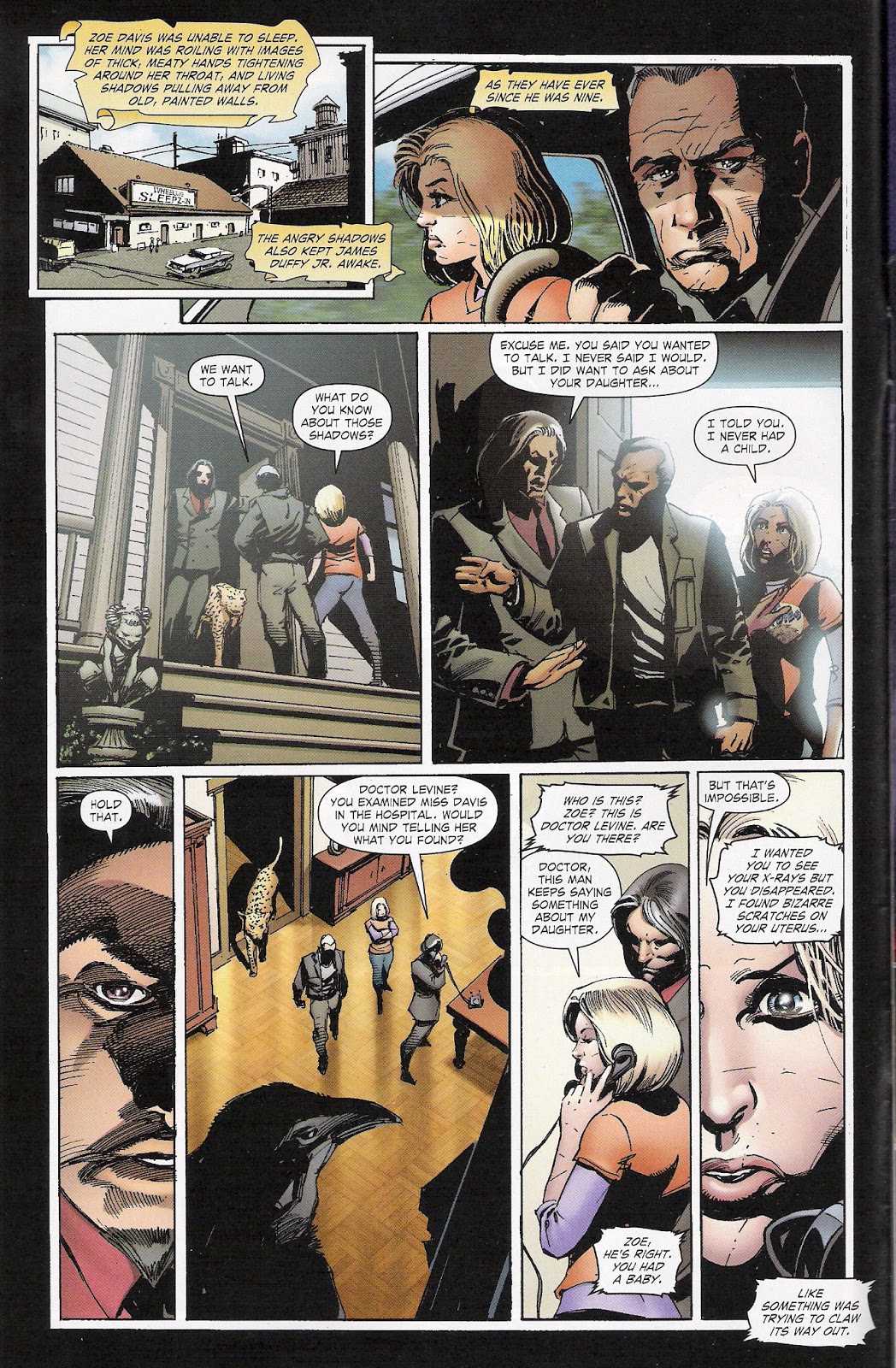
The premise centers around the enigmatic Baron Winters, a character whose exact age and origins are shrouded in mystery. What is known and/or surmised about Winters is that he has been around a long, long time, he rarely ever leaves the mansion in Georgetown (Washington, D.C.) wherein he resides, he assembles various agents to combat various supernatural, occult forces, and he really isn't a very nice man. Winters is always accompanied by and often speaks to a leopard named Merlin. Of his agents, little is known about how Winters knows these people or why. Sometimes they aren't even aware that they are working on his behalf as they go about what they believe are their normal lives. This means that, unlike most serialized fiction, you never know when a character might be killed or disappear never to be seen again, thus upping the suspense of the series.
To be honest, I was a little underwhelmed by the 14 issues that make up the mid-1980s first volume of this title. To be fair, these tales may have been more original when first published, but now there is little here that hasn't been seen before in other venues. The writing is still well done, and Colan's shadowy art style is best suited to horror. And I did become a little more engaged in the stories as the series progressed, but even at the time, the title found a very small, dedicated audience that wasn't large enough to keep Night Force afloat. So after 14 issues and four story arcs of varying lengths, Night Force was canceled. A text piece at the end of the final issue promised the title would return with a series of connected limited series in the next year or so, and while that prediction ultimately proved to be false, the title would return.
Sunday, January 27, 2013
Things That Make You Go Hmmm
Earth 2 0
DC Comics
James Robinson, writer
Tomas Giorello, artist
We are finally given some background and context for the DCnU version of Terry Sloan with this issue.
Not much is known so far of the history of Earth 2 in this new continuity. We have the Trinity -- or the Ternion, as they are known on this world -- of Superman, Batman and Wonder Woman. We also know that the two male members of the Ternion, Superman and Batman, each have a female sidekick or protege, Supergirl and Robin, respectively. If we also count Catwoman, Robin's mother -- And why wouldn't we? -- we have six costumed adventurers known to have existed on this version of Earth six years ago.
We learn in this book that there are two more. We aren't given a name or any details about the seventh costumed hero working to repel the hordes of Apokolips, but we know a seventh hero exists because Terry Sloan, the narrator of this issue refers to himself as "Mr. 8, the eighth and final wonder of this world" and "the smartest man on Earth."
For the first time, we see Mr. 8 fighting alongside the other heroes. We also learn that the people in the areas of this world that have fallen to Darkseid are not dead; instead, the citizens of Italy, Brazil, South Africa and Pakistan are victims of the anti-life equation, whose effects were first seen in Final Crisis.
Sloan decides he is tired of winning small battles while barely making any headway in the war against Darkseid. He determines the best way to deal a truly crushing blow is to sacrifice the people of these fallen lands, but he knows full well his comrades-in-arms won't like that solution. What's an unappreciated genius to do?
Friday, January 25, 2013
The Old Gives Way To The New ... Maybe
Powers 11
Marvel Icon
Brian Michael Bendis, writer
Michael Avon Oeming, artist
This latest volume of Powers has had a VERY spotty release schedule, but here we finally have the last installment of the "Golden Ones" story arc, sorta. A godlike being has gone mad and decided to take out her frustrations on the human race. So she floods the entire city of Chicago, killing more than 6,000 people, leaving more than a million displaced and more than 1,000 people missing, including new Retro Girl Calista, Triphammer and homicide detective Christian Walker.
The fallout of this latest development was supposed to lead into the latest incarnation of Powers, wherein all powers-related cases are now under federal jurisdiction. The new title is planned to be Powers: Bureau. However, with all of the delays leading into Powers issue No. 11, the first several issues of Powers: Bureau are all also quite late. In fact, by coincidence, the day before I read this issue, I received a notice from my comic supplier that my previous orders for Powers: Bureau Nos. 1, 2 and 3 have all been canceled by the publisher. Likely they will be resolicited in the future and this is just a move to correct the lateness issue.
Let's hope so anyway.
Tuesday, January 22, 2013
Secrets Revealed
Fairest 7
DC Vertigo
Matthew Sturges, writer
Shawn McManus, artist
This was a nice done-in-one story from this Fables off-shoot that lets readers in on a little secret of one of the longtime Fables characters. This tale is narrated by the Beast in the form of a letter to his wife, Belle or "Beauty," explaining a little mission for Fabletown he has undertaken. Set in the mid-1940s, Beast is tracking a beautiful but deadly female named Lamia. The two apparently have a history of such flights and pursuits. And while Beast is charged with once again apprehending Lamia, his recurring task is made more difficult by another pursuer who seeks to slay the fair fugitive. A tragic story with a twist, this is a must-read for any longtime Fables fan.
Sunday, January 20, 2013
Prettiest Back-Up Plans On Any Earth
Worlds' Finest 0
DC Comics
Paul Levitz, writer
Kevin Maguire and Wes Craig, artists
Despite some tragic events, this book offers us a glimpse of the debuts of our two regular series heroines. We see young Helena Wayne, daughter of the Earth 2 Batman and Catwoman, take her first flight as Robin under the watchful eye of her mother, much to the chagrin of her father. We see some of Supergirl's early training under the tutelage of her cousin, the Earth 2 Superman. We also learn why this Superman wants to keep Supergirl in reserve as just a secret weapon instead of openly helping. It seems that during an early battle between Superman and the forces of Darkseid, Lois Lane was killed. Superman refuses to risk Supergirl openly for fear he will lose her, too. And lastly, we see the two girls meet when Supergirl is called to help rescue an in-over-her-head Robin, the latter distraught at the death of her mother.
This issue provides a nice glimpse of these two heroines' early careers. Well done, gentlemen!
Friday, January 18, 2013
This Issue Has Issues
Green Arrow 0
DC Comics
Judd Winick, writer
Freddie Williams II, artist
Right off the bat, this issue has some problems. The cover lists the writer as current series scribe Ann Nocenti, but apparently that is not the case based on the interior credits.
Next, DC has apparently taken a single character trait of Oliver Queen and made it his sole defining characteristic. Oliver -- especially young Oliver -- has always been irresponsible, but this guy is just brash and impulsive. After apparently being kicked out of several Queen Industries jobs, Oliver has been banished to a clerk's job on an off-shore oil rig. He opts to invite all of his friends and turn the rig into a metal beach party platform. Also in attendance are best friend Tommy Merlyn in a nod to the continuity of the new television show, "Arrow," and girlfriend du jour, Leena.
This new version of Oliver is not without a conscience, as he quickly steps up and tries to defend the platform when the party allows armored pirates to sneak aboard and attempt to steal some of the crude the rig is producing. But again, irresponsibly, he doesn't think his actions through and ends up causing an explosion that kills most of the workers, pirates and his party guests, including Leena. In fact, Oliver himself likely wouldn't have survived without the intervention of a badly burned Tommy. That's not just irresponsible; that's criminally negligent and/or reckless.
This is now how Oliver winds up marooned alone on an island where he hones his archery skills. I assume that part of this origin story is the same as before because that time is glossed over with just a few, nearly wordless panels.
Same goes for Oliver's partnership with Roy Harper. We get snippets over a couple pages that clue us in that Roy hacked into Queen Industries computers, got caught, was arrested and jailed. Oliver is so impressed with Harper's tech and weapons prowess that he bails Roy out of jail and offers him a job. We're given little evidence of this tech and weapons prowess, and we're left to assume that Roy becomes Green Arrow's sidekick, Speedy, and later the adult hero, Arsenal, much like in the old DCU. None of this is shown.
Even with a different writer, this story is still very weak, although Williams' art is MUCH better than regular artist Harvey Tolibao's. There's another creative change coming on this title in a few months. Fingers crossed the new folks do better by Oliver Queen.
Wednesday, January 16, 2013
Please Help Peter David
For any of my readers who don't already know him, Peter David is a very prolific writer of not only comics, but also prose novels, television scripts, and I think even a few movie scripts. If you like comics and/or science fiction, odds are you have read or seen something of his. But his work is not limited to those two fields.
Peter David recently suffered a stroke, and while he is recovering, the various medical and recuperation-related bills are mounting. The family continues to update Peter's fans about his condition through his blog at http://www.peterdavid.net/
The family has also suggested a number of ways that Peter's fans can help, either through direct donations or by simply buying his books, most available in either print or e-formats. And they've asked that any of Peter's fans with a blog help spread the word. Hence this extra post.
For more information on how to donate or links to many of Peter's books, just go to this post from Peter's site. If you are looking for some of Peter's comics work, he had a very lengthy run on Marvel Comics' The Incredible Hulk in the 1980s and '90s and is the current writer of Exiles. Some of my favorites of his are also DC Comics' Aquaman in the 1990s and Young Justice in the early 2000s, as well as Fallen Angel, begun at DC, and later resumed at IDW Publishing.
Thanks for your time and attention for this special announcement.
Tuesday, January 15, 2013
I Didn't Get That
Phantom Stranger 0
DC Comics
Dan Didio, writer
Brent Anderson, artist
This was an interesting book, both for what it included and what (in my opinion) it didn't.
The DCnU version of the Phantom Stranger was first seen in the 2012 Free Comic Book Day special as part of the Trinity of Sin alongside the new Question and Pandora, apparently the architect of the DCnU. In the past, the Stranger did not have a definitive origin. That is not the case here. Though the names Judas Iscariot and Jesus Christ are never actually mentioned, there is little doubt that the Stranger used to be Judas before his judgment at the hands of the Council of Wizards for his betrayal of Jesus. He wears a necklace made up of the 30 pieces of silver Judas was paid for betraying Christ, according to the Bible. While the Stranger never had a definitive origin before, the idea of his being Judas is not a new concept. I first read it as one of four possible origins for the Stranger in the 10th issue of Secret Origins published by DC in January 1987. I can't say for certain if the version predates that book.
This book starts out replaying the judgment scenes from the Free Comic Book Day special, albeit from the Stranger's point of view this time. He acknowledges his guilt and begs for mercy from the wizards before being banished back to Earth to wander endlessly until he has atoned for his crime. The cloak he is given to wear is the one formerly worn by the one he betrayed, he tells us, and it seems that the cloak itself is what disguises his true appearance.
The Stranger is left to wander alone with his thoughts from ancient times to what appears to be the modern era but no date is actually given. Finally, a voice guides him to hot-headed police officer Jim Corrigan and we see the Stranger play a significant role in Corrigan's death and transformation into the Spectre, another classic DC hero being introduced to the DCnU for the first time. As the Spectre disappears to begin his own mission as God's spirit of vengeance, a single silver coin drops off from the Stranger's necklace and turns to dust. At this, the Stranger tells us he has learned the way he must earn his redemption, then wanders off to wait to be called again.
Here's my only major problem with this issue: There's no denying that the Stranger played a role in Corrigan being shot, killed and transformed into the Spectre. However, the Stranger was no more in control than Corrigan was of the situation. Corrigan was following the Stranger's lead and the Stranger was following the voice that led him to act. I get that for each act the Stranger performs at the bidding of this voice, he will lose one piece of silver until all 30 are gone and he is redeemed. But what exactly did he do? What exactly did he learn about what he must do besides follow a mysterious voice? That knowledge came in the form of the Who's Who page at the back of each of these Zero issues. In this issue, we have a Who's Who page on the Stranger that explains: "These callings are a double-edged sword for the Stranger. Although he can remove one of the 30 pieces of silver he wears as a cursed necklace, he is also eventually forced to betray those that he encounters as penance." This is nice information to have, but I don't know that I see this as betrayal when the Stranger doesn't know exactly what is going on either, and it would have been better if the story had made this key point clear, not the text page.
I've read complaints online about the writing on this book being weak, but other than the above, I have no problems with it so far. Plus, the next issue teaser mentions Trigon; as a confirmed Titans fan, I'm curious how Trigon will play into the Stranger's story. We shall see.
Sunday, January 13, 2013
To The Death
Aquaman 10-12
DC Comics
Geoff Johns, writer
Ivan Reis, artist
This book is getting intense as one might expect from the subject matter.
Previously we have learned that Aquaman was part of a group called The Others before joining the Justice League. We also learned that all of these heroes had run-ins with Black Manta and that much of the Aquaman-Black Manta antagonism stems from the fact that these two men each killed the other's father. That's all pretty grim.
Aquaman gets some small measure of redemption in these issues as we learn that he did not mean to kill Manta's father -- he thought it was Manta he was lashing out at. The Marine Marvel was enraged at the death of his own father at the time. His father died of a heart attack during a previous assault on the pair by Manta. In a rage, Aquaman tracked Manta to a vessel at sea and lashed out at the vessel's sole occupant. Unbeknownst to Aquaman at the time, Black Manta was diving below the boat, and it was his father who remained aboard.
We also learn the "secret origin" of Aquaman's trident. It is one of six Atlantean relics discovered by The Others. Each member of the team took one of the artifacts, which once belonged to the first king of Atlantis, the individual responsible for the sinking of that ancient continent. We learn that there was actually a seventh relic and that this piece is what Black Manta is now hunting, along with Aquaman and his Others comrades. That seventh item is the Dead King's scepter, the very device that was used to sink Atlantis, and thus more powerful than the other six items. And Manta manages to uncover the scepter before Aquaman, Mera and the remaining Others can stop him. Along the way, Manta manages to slay another member of that team, Vostok.
Also, I'm certain it is no coincidence that the Dead King's scepter looks identical to the weapon Aquaman's half-brother, Ocean Master, used to wield in the old DC Universe. I think it very possible that we will see the debut of the DCnU version of Ocean Master before this arc is concluded in issue No. 13.
But before we get to that issue, it is time for DC's Zero Month. We'll have the first of those books to look at next time.
Friday, January 11, 2013
Farewell Epic
Captain America 14-16
Marvel Comics
Ed Brubaker and Cullen Bunn, writers
Patch Zircher, Mike Deodato and Scott Eaton, artists
These three issues wrap up the "Shock to the System" arc and launch the "New World Orders" arc, but as with this entire relaunch of Captain America, the big bad throughout is Bravo, along with his wife, the new Hydra Queen. The first arc of this relaunch introduced readers to Bravo, a World War II-era ally of Cap's who was lost in an alternate dimension during a mission and listed as missing ever since. He's managed to find his way back now and Bravo is out for revenge against those who left him behind.
So far, through various story arcs and manipulations, Bravo has caused Cap to lose his super-human abilities for a time and has led to the deaths of a number of Cap's former allies. Along the way, Bravo has also allied himself with a number of Cap's former foes such as Machinesmith and Baron Zemo.
"New World Orders" looks like it could be the final arc before Brubaker's tenure on this title is over with issue No. 19. And Bravo has upped the game to pit all of America against Cap, turning public sentiment against him in the form of reality television attacks. This promises to be a huge endgame for this huge story.
Tuesday, January 08, 2013
I Can Admit When I'm Wrong
Winter Soldier 8-9
Marvel Comics
Ed Brubaker, writer
Michael Lark, artist
Previously, I criticized Brubaker for losing some of his energy for this book since it was already announced the book was ending.
Well, the book is NOT ending. Brubaker will be leaving after the next arc, but the title will continue on with another writer at the helm.
An even more serious error on my part, I was wrong about Brubaker's energy level. The first installment of this arc, "Broken Arrow," left me feeling like Brubaker was acting like a short-timer, but these final two installments have shown me the error of my pronouncement. This was a high-energy conclusion as Winter Soldier and the rest of S.H.I.E.L.D. try to track down a rouge former-sleeper agent who has kidnapped the Black Widow. The Widow is hardly a damsel in distress, but Leo Novokov, the architect behind this scheme against the Winter Soldier, has bigger plans for her than that. He manages to successfully brainwash her into attacking her former comrades.
My humblest apologies to Brubaker and crew for ever doubting them.
Sunday, January 06, 2013
... And Grow And Grow
Star Trek 11-12
IDW Publishing
Mike Johnson, writer
Claudia Balboni, artist
We've talked before about how this title is presenting new movie-universe versions of familiar "Star Trek" TOS episodes and how the differences between the two timelines are growing, and these two issues offer no exception. Fan-favorite episode "The Trouble With Tribbles" gets remade here as "The Truth About Tribbles."
In the classic version, the Enterprise responds to a priority distress call, rushing quickly to Deep Space Station K-7. Once there, they are "ordered" to guard grain samples from possible Klingon saboteurs. Lt. Uhura acquires a single tribble while taking part in shore leave on the station, and the tribbles' natural tendency to reproduce at an alarming rate threatens to bring disaster to the station and the startship, but the furry little creatures also expose a Klingon spy.
In this new version of events, there is no space station. Instead, the Enterprise is ordered to explore the Iota Germinorum system, and finds a Klingon bird of prey there, well outside normal Klingon space, a treaty violation. Before warping away, the Klingons deliver a garbled message about "dire threats" and "executions." The Enterprise crew beams down to the fourth planet in the system, apparently the home planet of the tribbles, which are a new species to the Federation members. All of them anyway, except one, which offers a nice nod back to events from J.J. Abrams' 2009 Trek reboot film.
Upon beaming down to Iota Germinorum IV, the crew finds the tribbles, their natural predators and a number of Klingon bombs. Kirk assigns Scotty and Chekov to disarm the bombs when the tribbles' aforementioned rapid reproduction starts to threaten the away team. To add to the crew's troubles, they soon learn that tribbles are also threatening to overrun the population back on Earth. It quickly becomes a race against breeding to save both planets.
Fun stuff!
Friday, January 04, 2013
She's Haunting Comic Shelves Again
Ghost: Resurrection Mary (Dark Horse Comics Presents Vol. 3, 13-15)
Dark Horse Comics
Kelly Sue DeConnick, writer
Phil Noto, artist
Or is she? Because this reimagining doesn't seem to be the same Ghost character as in the last go-round.
Ghost was one of several "superhero" characters created by Dark Horse Comics in the mid-1990s. That series, by writer Eric Luke, centered around Elisa Cameron, a former reporter apparently killed while working on an investigative piece in the fictional city of Arcadia. At first, Cameron does not recall who she is or how she came to be this ghostly apparition. Through several specials, one-shots and finally a 36-issue ongoing series, she battled the mystical villains and underworld types who populated the very dark Arcadia. I enjoyed that first run of Ghost because the character was smart and used her brain, unlike many other female comic leads at the time, but I dropped the book once Ghost learned the truth about her death.
Apparently, there was a relaunch that ran for another couple years shortly after the initial run, still focusing on Elisa Cameron as Ghost but changing some of the details of her back story along the way.
Now this three-part serial in Dark Horse Comics Presents is reintroducing Ghost, and I am definitely signed up for the ongoing that is following. This Ghost may or may not be Elisa Cameron. Not even she knows who she is after she is forced to materialize by two television "Phantom Finders" using a strange device while taping an episode of their program. The pair are trying to summon a spirit named Mary Bregovy, after all, and since this serial is subtitled Resurrection Mary, I'm not assuming this is the same Ghost we've seen before.
"Phantom Finders" host Tommy Byers seems to be a smooth-talking young con man who doesn't really believe in the phantoms he "finds." The character puts me in mind of the host on a real ghost adventures show I've seen. His "partner" and video man is Vaughn Barnes, a former newspaperman who isn't "former" by choice. Vaughn may not be any nicer a person than Tommy, but at least he's honest about it, which gives him an endearing quality.
We don't have much information on the device they have except that Tommy acquired it through mysterious means. After using the device to make Ghost materialize and capturing the event on film, Tommy tries to cash in on their video proof of an afterlife, a move which Vaughn sabotages. While the two argue about that incident, the former owners of the device show up wanting it back. Ghost also reappears and saves Tommy and Vaughn by killing one of their assailants. Vaughn decides that they now owe it to Ghost to help her figure out who she is/was and drags Tommy, reluctantly, along. And that is where this setup ends.
The writing on these three short installments is good, and the art is terrific, so hopefully DeConnick and Noto will continue into the new ongoing. The action is fast paced, and I'm definitely along for the ride to see where this is headed. If you happened to miss these three issues of Dark Horse Comics Presents, you can pick up all three chapters collected in Ghost No. 0, released the month before No. 1.
Tuesday, January 01, 2013
That's What I'm Talking About!
Time Bomb tpb
Radical Comics
Jimmy Palmiotti and Justin Gray, writers
Paul Gulacy, artist
***mature content warning***
Happy New Year, everyone!
This is an incredible done-in-one trade telling a very cinematic action movie type of tale that gets the blood pumping and makes you want to finish the book in one sitting.
A civil works project in modern-day Berlin accidentally uncovers a massive underground facility, almost the size of an entire city. Agents from several governments are quickly dispatched to determine the purpose and origin of this astounding find. But they unwittingly trigger what is believed to be a Nazi doomsday device left over from World War II.
A missile launches only to explode after climbing about a mile into the atmosphere. That explosion releases an airborne virus that is killing the entire population of Berlin, and spreading outward from there. It is quickly estimated that the human race has about 60 hours of existence left on this planet.
Fortunately for the world, a little-known U.S. government project has proven that time travel is possible. Unfortunately, the process isn't exactly perfected.
A team of four adventurers is chosen and assembled to be sent back in time, but as it is explained to them, the scientists in charge have very little control about destination time. The formulas involved are little more than guesswork. The quartet is being sent back sometime before the doomsday device was triggered, armed with government contact names and numbers for several decades and video proof of what has happened. The hope is that they can convince the powers that be whenever they materialize to find the device and disable it in the past before its destruction can be unleashed. And they have just 24 hours to complete that mission before the time travel is reversed and they are yanked back into the present.
Oh, and there's the unsettling fact that the time travel device is called a "time bomb." Not the most comforting of names.
If only things had gone according to plan.
If you like action/adventure and/or science fiction, check out this book. You'll be glad you did!
Sunday, December 30, 2012
I Think I'll Pass On More
The Exterminators tpb Vol. 1: Bug Brothers (collecting issues 1-5 of the series)
DC Vertigo
Simon Oliver, writer
Tony Moore, artist
***mature content warning***
This is a book that I was inspired to try based on recommendations I heard listening to comic-themed podcasts. More than once I'd listened to others discuss how much they enjoyed the writing, the art, the story. And I have to admit, despite not much caring for the setting or most of the characters, I did feel a small amount of sympathy for the main character, Henry James, and a small but real curiosity about where the story was headed.
Henry, an ex-convict, is trying to get back on his feet after his stretch in prison. He goes to work for his stepfather, Nils, who owns Bug-Bee-Gone, a pest control company in Los Angeles. The people Henry meets, including some of his new co-workers, are mostly all foul-mouthed degenerates, and the neighborhoods they inhabit are filthy, vermin-infested dumps, to say the least. The Bug-Bee-Gone boys have a new roach gel in their arsenal named Draxx, which has some peculiar properties. This and another subplot involving a mysterious box Henry discovers are what piqued my curiosity the most after reading this first volume.
I decided to research a little more to see just how many volumes were in this series. Maybe if there were just one or two and I could find them cheaply enough, I might continue on. Well my research revealed that the series had run for 30 issues and been collected in a total of five trades. The plan had been for the series to run longer than that, but the book was canceled before it had a chance to go beyond 30. Still, it seemed that the creators knew the end was coming and still wrapped things up, albeit a bit more quickly than originally planned.
What I hadn't counted on in researching how long the book ran, however, was discovering the answers to my questions, both about the box and Draxx. Once I'd read and knew the answers to those questions, I have no real desire to continue reading this story I only marginally cared for, so I doubt I ever seek out the other four trades for this series. I just don't care that much to read them. The art isn't bad, and honestly, the characterizations were pretty consistent and logical for the characters, so I can't really fault the writing either. I just didn't care enough about the characters to keep reading. Let's just say this story wasn't quite my cup of tea.
Friday, December 28, 2012
Revelations And More Questions
Rachel Rising 7-10
Abstract Studio
Terry Moore, writer and artist
When last we saw Rachel, she along with her aunt, Johnny, and her friend, Jet, were in a car accident. Of course, being already dead, Rachel seems to have escaped the accident unscathed. Johnny is in the hospital with some pretty severe, extensive injuries. And Jet was killed.
Her neck was snapped.
Except that, like Rachel, Jet isn't exactly dead, either.
Also in the car at the time of the accident was a little girl named Zoe. Rachel and the rest were trying to help Zoe despite not really knowing her. Zoe, I'm guessing somewhere around 10 or so, lost her entire family recently. We're not sure if she watched them die at the hands of a blonde woman or if the blonde woman caused Zoe to kill them herself, but they are all dead. Zoe ended up in the foster care system where she was threatened by an abusive would-be foster parent. Once again, the blonde woman showed up, and this time there was little doubt that the blonde woman eliminated the threat.
Zoe also escaped the car accident unharmed and has run away, but death seems to be continuing to follow her.
While Rachel tries to help Jet come to terms with what has happened to her, Zoe ends up in a farm house. The elderly couple who lived there are dead and Zoe is making herself a peanut butter sandwich when the blonde woman shows up again. We finally learn the name of the blonde woman, Lilith, Adam's first wife and often depicted as a demon or the first witch. Lilith explains to Zoe that she in fact is NOT a little girl but a demon named Malus and that death has followed in her wake for more than 400 years.
Along the way, we learn some very unpleasant things about the past of the town of Manson. And we also get quite a few more unanswered questions to replace the few that are answered by these issues.
Not at all sure where Moore is going with all of this, but I'm enjoying being a little creeped out by the journey.
Tuesday, December 25, 2012
I'm Sensing A Theme Here
Nightwing 10-12
DC Comics
Kyle Higgins, writer
Eddy Barrows, Geraldo Borges and Andres Guinaldo, artists
I'm not currently following Red Robin in Teen Titans or Red Hood in Red Hood and the Outlaws, but almost all of the other Bat-themed characters in the DCnU are located and mostly operate in Gotham City. That includes Batman, Robin, Nightwing, Batgirl and Batwoman. That's five separate heroes for one city. Now, out of those, I'm also not following Batwoman, Batman, Detective or Batman and Robin either. So, out of all those heroes, I'm really only currently following two, so maybe I'm just seeing a coincidence and falsely assuming it's a larger theme, but it still seems mighty odd.
The current story line in Batgirl involves a character named Knightfall and her minions who take a lethal approach to fighting crime. They see themselves as superior to the Bat crew because they deal with bad guys in a final way rather than sending them to jail or Arkham Asylum and allowing them the opportunity to escape and do evil again. There's also a cop involved who doesn't really much care for Batgirl but ends up working with her to help defeat Knightfall.
In these issues of Nightwing, a new character named Paragon has decided that the Bat crew isn't effective enough. He's decided to enlist followers for his Republic of Tomorrow, and they have targeted Nightwing. Why? Well, it seems two of their members were killed and one of Nightwing's escrima fighting sticks was found at the scene. Of course, we readers know Nightwing didn't kill anyone, so he's being framed. Chief suspect for framing Nightwing seems to be a Gotham police detective who has a grudge against Nightwing.
Things that make you go hmmmmmm.
Having said that, these issues of Nightwing are pretty good. First off, not everyone automatically believes that Nightwing is guilty of the murders. It's nice to see some of the powerful people in Gotham using their heads to figure out that a known hero likely wouldn't have killed someone. Also, Dick follows the clues to find out who the real killer is. The process he uses to dig up evidence and get at the truth is not only sound logic but takes us back to events in previous issues of the title. Well done, all!
Oh, and Merry Christmas to anyone who celebrates the holiday today!
Sunday, December 23, 2012
Always Within The Rules, Yet Still Unexpected
Fairest 5-6
DC Vertigo
Bill Willingham, writer
Phil Jimenez, artist
These two issues bring the first arc of this new Fables spin-off title to a very satisfying conclusion. This arc involved Ali Baba awakening Briar Rose from her deep slumber, but only after first awakening the also sleeping Snow Queen, who quickly captured the pair along with their whimsical guide, a bottle imp, Jonah. Before the tale is wrapped up, Willingham brings eight other powerful magic wielders into the mix and brings things to the aforementioned great conclusion.
I did not see many of the twists and turns coming in the final installments of this arc, but that is what keeps this universe fresh after nearly 200 issues among all of the related Fables titles. Willingham always stays true to the nature of the characters he is using, but often his research has turned up little-known and long-forgotten aspects of these characters that allow him to continue to surprise readers while maintaining the internal logic of his creation.
Every comics or fantasy fan should be reading these books!
Friday, December 21, 2012
Just Not Feeling It As Much As I'd Hoped
Batgirl 11-12
DC Comics
Gail Simone, writer
Ardian Syaf, artist
These two issues represent the middle of an arc begun in Batgirl No. 10 and to be concluded in Batgirl No. 13, which comes after the special 0 issue origin tale. Batgirl is facing off against a new villainess named Knightfall (Love how the DCnU is recycling all of these names from the old, especially when they put a completely new twist on them; for instance, Knightfall was the name of a story arc in the old DC, now it's a person.) and her small army of faithful lieutenants. These ladies believe themselves to be the good guys, stomping out crime in Gotham. But they cross Batgirl when they employ lethal means, even for the smallest infractions of the law.
Batgirl has determined the true identity of Knightfall, which leads us into her origin tale, a pretty dark and grisly one that might leave anyone a little twisted in the end. Along the way, Batgirl teams with a Gotham City police detective who has been less than friendly in the past and also comes into conflict with Batwoman.
This arc is a solid read. Simone delivers a great story built on wonderful characterizations. She has taken the Barbara Gordon character through some incredible adventures as Oracle in the old DC Universe and has transitioned her back to being Batgirl masterfully well. And Syaf's art is very nice to look at and easy to follow from panel to panel. His faces are recognizable as the same characters from panel to panel and page to page.
On top of that, I have always liked Batgirl. As much as I enjoyed Barbara Gordon's portrayal as Oracle after she was crippled by the Joker in The Killing Joke, I was one of the people who enjoyed the occasional flashback story to her time as Batgirl and looked forward to her return in the DCnU.
Really, it's not her, it's me. My new attitude on buying comics is to stop buying the stuff I'm not enjoying as much. There are just too many other financial demands with being a parent to buy anything and everything as I once did. I like this character and I enjoy this creative team, but I'm just not liking this book as much as I'd hoped I would. I've already ordered the title through the "Death of the Family" Bat-crossover event, but I think those will be my last issues of this title unless something changes soon.
Of course, the bittersweet part of that decision was the news just a few days later that DC has suddenly fired Simone from this title. Adding insult to injury, she reportedly found out about the firing via email. No details of why have been released to the public at this point, but I feel bad for this wonderful writer and am confused by this move by DC editorial. The news so soon after my decision to drop the title almost makes me feel guilty about the whole thing.
Addendum: In case anyone missed the news, the day this post went up it was announced that DC has rehired Gail Simone as the writer of Batgirl. So chalk one up for fandom united!
Tuesday, December 18, 2012
At Last It Can Be Told
The Lone Ranger 7-8
Dynamite Entertainment
Ande Parks, writer
Esteve Polls, artist
Most people can tell you the basic origin of the Lone Ranger: He's the sole surviving member of a posse ambushed by the outlaws they were tracking. Those are the basics even if one doesn't know some of the details like the outlaws, the Butch Cavendish Gang, ambushed the Texas Rangers at a place called Bryant's Gap or that the Lone Ranger's mask -- first a device to hide his true identity, John Reid, from the Cavendish Gang as he hunted them down and later to make him a symbol for justice, more than just a man -- was cut from the vest of his brother, one of the Rangers killed in the ambush. Other details might change from time to time with different tellings; for instance, sometimes John Reid was deputized as a Ranger specifically for this fated posse and other times he was a full-time Ranger before the posse. Even Silver has a definite origin.
As far as I know, however, there is no definitive origin for Tonto.
I have heard bits and pieces of a background for Tonto, but when such details are included, they sometimes contradict what might have been revealed in other places. That makes me think such details are the invention of specific writers trying to rectify Tonto's lack of a background. Even the specific tribe to which Tonto belongs is often ignored or contradictory from other sources when included. I know several times in movies and television programs, the Lone Ranger and Tonto are shown coming in contact with Apaches, but that doesn't mean Tonto is an Apache. I have heard or read at least two tales that refer to Tonto as Potawatomi, and that is how Wikipedia lists his heritage.
These two issues of Dynamite's The Lone Ranger are the first installments of an arc titled "Native Ground" that attempts to give this version of Tonto a background. The very few scenes that take place in the comic's current continuity show the Lone Ranger carrying the gravely wounded Tonto in a wagon. Tonto was beaten, stabbed and shot in the last arc, "Hard Country." The Ranger is taking Tonto home at his request as only Tonto's own people would be able to save his life at this point, if such a feat is even possible. The Ranger is stopped by several warriors on the edge of Ute lands until he explains the situation. Then they grudgingly agree to escort the pair to their chief and let him decide their fate.
The bulk of the story pages deal with events from several years in the past. Tonto is not the chief or anything, but it is clear he is a respected warrior within the tribe. That means he also has his detractors among his fellows. In this incarnation, Tonto has a wife, Chakwaima, and a young son, Tacome, maybe 3 or 4 years old. His extended family also includes Chakwaima's mother and a young brave named Kahnaka. Kahnaka is old enough to have already gone through a vision quest and is considered a man in the eyes of his tribe, but is still quite young and inexperienced. The youth's father is dead, no mother is mentioned, and Tonto has "adopted" the young man, giving him counsel, guidance and, when needed, protection.
Nobody is trying to make the case that American Indians had an idyllic existence during the progressive expansion of white settlers across the country, but Tonto's tribe is depicted as being content and happy. Of course, that means that tragedy must soon strike, as Tonto surely would not abandon a still living wife and child to traipse around the frontier dispensing justice.
This was a great glimpse of an earlier time in Tonto's life. I feel for the character that it could not last.
Sunday, December 16, 2012
Taking Him Down
Worlds' Finest 3-4
DC Comics
Paul Levitz, writer
George Perez and Kevin Maguire, artists
These two issues complete the first story arc of this title as Huntress and Power Girl take down the radiation-spewing bad guy, but they only manage to do that after first inadvertently feeding him even more raw power. Before his demise, however, this villain lets slip a few things that give the heroic duo some food for thought: Power Girl observed in the first two issues that the irradiated Hakkou resembles a parademon, one of the minions of Darkseid of Apokolips. As the battle continues in these issues, both women make note of Hakkou's knowledge that they are not originally from this world and the fact that he targeted what Power Girl hoped might be a successful way to bridge dimensions.
I like this book just a bit more than Earth 2 because these two heroines are just plain fun. Robinson is writing Earth 2 as a much more serious drama, and that book is quickly seeming to become a little too melodramatic. Levitz, on the other hand, despite all these two women have lost, is keeping things lighter in tone. Huntress is usually no-nonsense and serious, as one would expect from the daughter of Batman, but Power Girl is all about having a good time along the way and helps to keep her friend from going too dark.
I didn't talk about it last time, but the idea behind the art is a nice touch in this book, too. George Perez is the artist for all of the modern sequences in the book, and he is handling those art chores in his usual highly detailed and simply gorgeous style. But a large focus of this book is these characters' lives from before they were mysteriously thrown into another world, back five years ago when they were Supergirl and Robin, not Power Girl and Huntress. Kevin Maguire handles the art chores whenever there is a flashback sequence to these women's time on Earth 2 or just after they arrived on this Earth. And he handles those art chores with his own clean, curvy linework. Maguire and Perez each have their own distinctive styles, but the two draw these characters similarly enough that the transitions aren't at all jarring. And the format means fewer pages for each man to turn in. That's another plus because both of these fan-favorite artists might have trouble working solo on a monthly book and making their page counts. Really liking this book right now and looking forward to where it will take us.
Friday, December 14, 2012
Friends Again
Action Comics 11-12
DC Comics
Grant Morrison, writer
Rags Morales, Rick Bryant and Brad Walker, artists
During the infighting in the most recent issues of Justice League, Superman says at one point that he and Batman are friends and have worked together outside of Justice League missions. These two issues of Action Comics give us a glimpse of the beginnings of that cooperative relationship, and if handled properly in the future, this will be a nice return.
Batman is often portrayed in modern comics as aloof, always keeping himself distant and apart from his super-powered colleagues. This is often explained as a defense mechanism in Bruce Wayne's psyche as a result of his not having any actual super powers and never quite trusting the others who do. When handled well, that can be a valid portrayal of the Dark Knight Detective.
However, some of my favorite comic book stories from childhood have Superman working side by side with Batman and Robin, either as part of the larger Justice League of America or together alone in the pages of World's Finest Comics. It is nice to see these two acting as friends and confidants again. I hope this development lasts.
The reason Superman has asked for Batman's help is explained in the art above. Superman saved the life of his editor, George Taylor, from a bomb in the previous issue. But in doing so, it seemed to observers that Clark Kent died, and Superman allowed that belief to remain. But now he is regretting killing off his secret identity in favor of being Superman 24/7.
Tuesday, December 11, 2012
I'm Guessing Alan Scott Will Be The Lead Here
Earth 2 3-4
DC Comics
James Robinson, writer
Nicola Scott, artist
James Robinson is certainly playing with longtime readers' expectations in this series as several familiar faces are being used in seemingly unfamiliar ways on this DCnU version of Earth 2.
These two issues not only give us the secret origin of Green Lantern -- a heavy-handed affair just dripping with forced emotion -- but also introduce us to Capt. Al Pratt, the Atom. Pratt, it seems, was in the military during the Apokolips invasion of five years ago and came out of that conflict with some pretty fantastic new abilities. In the fourth issue, he seems to display super strength, but he has also been able to alter his physical size, growing to about twice his normal height. He has been working as a covert, powered agent of the military and is quickly dispatched to shut down the activities of Hawkgirl and the Flash before they have a chance to even figure out what they are supposed to do. So, is the Atom one of the good guys or not?
The bulk of the third issue is devoted to Alan Scott being given his powers and adopting a ring to focus his energies through. Scott, the sole survivor of the train wreck we saw in the second issue, is transformed into the Green Lantern by the Earth itself, being given the power of the Green, which would seem to make him this world's answer to -- Swamp Thing? Arguably, Alan Scott was the elder statesman hero of the Justice Society in the old DC Universe, at least since the Earth 2 version of Superman was wiped from continuity in 1985's Crisis On Infinite Earths. Several times during his transformation into the Green Lantern, both Scott and the emerald fire that represents his raw power refer to this world's fallen Kryptonian hero and the fact that Scott must now assume that role, becoming the Earth's ultimate champion.
These issues also introduce a new villain -- Grundy. The new character, an avatar of the Grey, the decay that eternally opposes the living, vibrant Green, has some similarities in appearance to the old swamp monster Solomon Grundy who frequently fought Earth 2's heroes of old, but he also closely resembles Nekron from the Blackest Night story arc in the old DCU.
Sunday, December 09, 2012
Never-Ending Stories And Commercials
Justice League International annual 1
DC Comics
Geoff Johns and Dan Didio, writers
Jason Fabok, artist
Superhero comics are by nature ongoing, continuing stories. The characters rarely undergo real change so they can continue to be recognizable as they go through their various adventures. But within that ongoing narrative, there are several beginnings and endings. Story arcs come and go, wax and wane. Plot threads get tied up and give way to new plot threads. At least the best stories do.
Not every comic has to be a done-in-one, but the reader can be left feeling unsatisfied if every story serves only to move you into the next story with never a chance to pause and take stock. But more and more, some comics seem to be just that. Not really a story in and of themselves, but merely a teaser for the next big thing, which ends up being a teaser for the next big thing and so on. That seems to be the case for this comic.
I confess, I haven't kept up with the New 52 Justice League International title. I tried it for the first story arc, but dropped the book after issue 6, largely because I didn't like the changes made in the main character, team leader Booster Gold, from his old incarnation. So I have no frame of reference going into this annual for what came immediately before. I just know Justice League International has been canceled.
This is a team falling apart and we see evidence of that as this story opens with Booster trying to salvage the team and failing. One member simply walks out following the completion of the JLI's most recent mission. Then another proceeds to attack the rest of the team, incapacitating most of them, including two new members just brought in for this annual. Booster finally manages to take down the threat, but just as he does, he is interrupted by the arrival of a future version of himself. Future Booster starts talking about things the reader knows nothing about, confusing current Booster, too, and then mysteriously vanishes. Current Booster is left to wonder about what has just happened for a page before he, too, vanishes unexpectedly. A final scene follows to let readers know that none of the various incapacitated JLI members actually died. The ultimate threat remains a mystery and the book closes with the line "To be continued in Justice League in 2013!"
People grow tired and lose interest in never-ending stories after a while, and who among us doesn't fast-forward through the commercials whenever possible or refocus our attention elsewhere when they come on; so why would I want zero resolution and non-stop teasers in my comics?
Friday, December 07, 2012
OK, Slowly Getting Better
Justice League 7-12
DC Comics
Geoff Johns, writer
Gene Ha, Gary Frank, Carlos D'Anda, Ivan Reis, Joe Prado and Jim Lee, artists
Justice League No. 7 brings us up to the current time frame after the first arc of this title took us back five years to the team's formation. Many people criticized the League presented here because they didn't work together, barely even got along. That can be excused in a team brought together for the first time, still getting to know one another and learning to gel. But the word "team" is used just as loosely in this prologue to "The Villain's Journey." It's been five years of these guys getting to know each other and learning to work together, and they still seem like they can't get along and really don't care for each other. That's not what I want long-term from this team.
Issue No. 8 serves to unite the members of the League, albeit briefly, in a little side story, guest-starring Green Arrow. Here the League is united in their dislike of the Emerald Archer and their decision not to admit anyone else to their ranks, at least for the most part. This issue serves as a diversion from "The Villain's Journey" arc, and while a good read, is more a book-length teaser for the then-newly announced Justice League of America title coming in 2013.
"The Villain's Journey" really gets under way in issue No. 9 and rolls quickly along. The villain of this piece isn't cut from the traditional pattern. Rather than seeking to achieve power, money or glory for himself, he is trying to improve the League members by teaching them first-hand about loss. What he doesn't realize is that each of these heroes does in fact know a great deal about loss already. But still, Graves manages to teach them a little about humility and responsibility.
I don't see this tale as ranking among the all-time best Justice League stories by any means, but I can see Johns moving these heroes toward the kind of characters I want to read about. As much as I appreciate that he is moving them in a positive direction, I want my Justice League heroes to already be there. I want them to be the best and brightest stars, not working toward becoming that.
Tuesday, December 04, 2012
Not Your Daddy's Oz; It's Your Granddaddy's
Dorothy and the Wizard in Oz 1-8
Marvel Comics
Eric Shanower, writer
Skottie Young, artist
This is the fourth limited series Marvel has produced adapted from the original Oz series of children's books by L. Frank Baum. They've all been by this same creative team, lending continuity of art and appearance for the recurring characters. Shanower is well known for doing other Oz-related works, all quite faithful to the original novels.
In a nutshell, if you've only seen the late 1930s Judy Garland movie (not to knock that classic film), you don't know the entire story of the first book as Dorothy visits many strange lands within Oz besides the Emerald City and the Wicked Witch of the West's castle. But then there is a whole series of books describing Dorothy's various return visits to Oz, meeting even more fantastic creatures, as well as checking in on the Scarecrow, Tin Woodsman and the Lion.
In this series, for instance, Dorothy has been visiting relatives out in California with her Uncle Henry when an earthquake opens up a hole the poor girl falls into. She falls for what seems like a long time along with her kitten, Eureka, a cousin, Zeb, and Zeb's horse, Jim. When they finally come to land, quite safely as it happens, they find themselves in the land of the Mangaboos. Shortly, as the title might have already indicated, the Wizard shows up, having floated into another earthquake-produced hole in his famous hot-air balloon. The small party continues to journey through a number of other strange lands as they try to make their way back to the surface of the earth.
These stories are quite entertaining for an adult, but they are equally appropriate for children, not always the case with some comics these days. Check them out!
Sunday, December 02, 2012
Those Murderous Fiends!!
Fables 115-121
DC Vertigo
Bill Winngham, writer
Mark Buckingham and Steve Leialoha, artists
I picked this arc of Fables to discuss because I like the Wolf family of characters so much. Boy did that backfire on me.
Once again, the name of this rather lengthy story arc is "Cubs in Toyland." The first issue of this arc had young Therese, one of seven youngsters belonging to Bigby Wolf and Snow White, being "kidnapped" by a toy boat. As one can anticipate from the title of the arc, the boat takes young Therese to Toyland, but their destination is hardly the fun-filled place one might expect. It seems nothing is left living in Toyland as all of the magic is gone from the realm. The broken and discarded toys that inhabit Toyland are still quite animated because they never were alive to begin with, but they are desperately in need of a new monarch to restore the magic and splendor of their home. This is why they have sent out the toy boat that brought Therese.
One might also assume from the title of the arc that Therese is not the only child of Bigby and Snow to come to Toyland. In truth, she wasn't so much kidnapped by the boat as enticed to run away by it. Various taunts from her sister and brothers helped push Therese to that decision. Later that night, after Snow discovers that one of her children is missing, Darien, the eldest of the litter, begins to feel no small amount of remorse for the taunts. The magical nature of Therese's journey prohibits her parents from tracking her whereabouts, but with the help of some other characters, Darien secretly sneaks off to follow and bring his sister back to Wolf Manor.
I won't spoil the remainder of the story by giving further details beyond what one might assume from the title of today's post, and that much information can be gleaned almost anywhere on the Internet. Suffice to say that not everyone makes it out of this story alive, and none of the Wolf clan is left untouched by the events of this story. This isn't the first time Willingham and crew have killed off a beloved cast member in this title. In fact, sometimes it seems that the more popular a character grows in fans' eyes, the greater likelihood that something truly tragic will befall said character. It's one of the things I like/despise about this title. It's just sad when tragedy hits so close to home.
Friday, November 30, 2012
Sidetrack From The Saga
Whipping Boy
Dell/Abyss
John Byrne, writer
***mature content warning***
There is still one final tangent to explore along my journey through both volumes of John Byrne's Next Men and their prequel comic, John Byrne's 2112.
As discussed last time, I don't always read all of the fan mail or cross-reference notes in an older comic I'm reading for the first time. Sometimes I do, but other times I just breeze right past them. When I discovered that the link between JBNM and 2112 was much stronger than I at first realized, I decided to go back and check out another editor's note from JBNM Volume 1 a little closer.

In JBNM No. 16, the final issue in the "Fame" story arc, Dollar Comics executive Ben Horowitz has introduced the Next Men to the world as real-life superheroes. A Chicago-based newspaper reporter and her editor, simply named Donna and Walker, respectively, take note of the story and are curious about it. The pair have a brief conversation about the Next Men and wonder about their link to someone named Paul Trayne and some events from five years in the past in a place called Faulkner, Ill. Donna and Walker show up again briefly in a later issue of Volume 1 while the Next Men are being hunted by the authorities but not at all in JBNM Volume 2, so their contributions to the overall narrative are slight. But that first conversation between them that references Paul Trayne and Faulkner, Ill., includes an editor's note: "For complete details, pick up a copy of 'Whipping Boy,' available from Dell/Abyss."
So off I went in search of this title to see how it tied in with the rest of JBNM.
I searched several back issue sites online, as well as eBay, but could not find a single comic going by this name. I wasn't familiar with an Abyss comic publisher, but Dell published a number of comics several decades ago. Still, I was coming up empty everywhere I searched. By chance one day, I decided to try a search on Amazon.com. Amazon is not a great site for finding single-issue comics, but maybe, just maybe, I thought, there might be a trade of Whipping Boy available. I did find the book on Amazon, also learning why I'd had so much trouble locating it before. Whipping Boy is NOT a comic, but a prose novel written by Byrne and published in 1992, the same time 2112 and JBNM got started.
In hindsight, this novel really doesn't tie into JBNM much at all. I think Byrne merely chose to include Donna and Walker, two of the characters from his novel, in JBNM as a way to cross-promote the paperback. But if you happen to be curious, it isn't a bad read, although a tad long at 498 pages. (I personally think the narrative could have been edited down from that length somewhat as the action seems to bog down a bit in places, but I was interested enough to finish the entire thing.)
The title Whipping Boy refers to Paul Trayne, a 15-year-old mutant with the ability to look into people's souls and remove their guilt and shame, taking those things into himself. On the surface, this might seem like a wonderful thing, even a gift, as many in the novel first describe it. But keep in mind that as much as JBNM is a science fiction story, Whipping Boy is a horror story with an emphasis on religion and morality. Paul, guided by his father, the Rev. Robert Trayne, reaches out to the residents of Faulkner, Ill., offering his gift. The phenomenon comes to the attention of Chicago newspaper editor Walker Stone, who decides to send one of his reporters, Donna Wojciechowski, to see if Trayne is real or a charlatan. Donna finds more than she bargained for when she arrives, first finding many of the residents of Faulkner greatly changed by the power of Paul Trayne, and later feeling the effects of his "gift" firsthand. And Faulkner is just the beginning of the plans Paul and his father have for bringing this "gift" to the world.
Labels:
2112,
Dark Horse,
John Byrne,
Next Men,
Whipping Boy
Tuesday, November 27, 2012
Genesis Of A Saga
John Byrne's 2112
Dark Horse Comics
John Byrne, writer and artist
***mature content warning***
I completely missed the references the first time through.
The previous two posts to this blog have been about John Byrne's Next Men. I don't always read the letters pages when I go back and read an old comic I've recently purchased. I typically scan the letters for familiar names or things that might catch my eye, but seldom do I read them all. Such was the case when I read my first dozen-and-a-half issues of JBNM for the very first time. But in this most recent reading of the books, I stumbled across several mentions of another Byrne/Dark Horse book, a one-shot, titled John Byrne's 2112. I gathered from those letters that this was a book published before JBNM and that the big bad from that title, Sathanas, had first appeared in 2112.
I decided to make my reading experience of JBNM complete by trying to include this book, too, if possible. But to be honest, I expected the link between 2112 and JBNM to be very slight. My expectation was that 2112 was written as a self-contained, standalone, done-in-one story, possibly having been written a few years before JBNM. Then later, while crafting the story that would become JBNM, Byrne had decided to reuse an old character from a previous story.
I was successful in my attempt to find a reasonably priced copy of John Byrne's 2112, and it arrived in time for me to read it immediately after I finished Next Men: Aftermath. I wish I had known about the book earlier and had ordered it and read it BEFORE reading JBNM because it truly is a prequel to the JBNM saga.
The book was published in November 1991, just two months prior to the publication of JBNM No. 1, likely just allowing enough time for the four Dark Horse Comics Presents vignettes later collected into JBNM No. 0. Sathanas is the evil mastermind behind a mutate uprising in the year 2112. Think of mutates as similar to mutants. And the events of the 2112 one-shot lead directly into Sathanas' appearance in the pages of JBNM. But the connections do not stop there.
The point of view character in 2112 is a young law enforcement cadet named Thomas Kirkland who also plays a key role in the JBNM series. Kirkland learns in 2112 that his superiors have kept secret the origins of the mutates from the general populace -- that they stemmed from a government genetics project gone wrong in the 20th century, a project codenamed Next Men. There are other names and characters in 2112 which reappear in JBNM, so there can be no question that Byrne fully intended this book to lead into the Next Men saga. For completists, this book is indispensable when trying to read JBNM, and well worth a look.
Sunday, November 25, 2012
The Saga Continues
John Byrne's Next Men (Volume 2) 1-9 (or issues 31-39 if you continue with the original numbering)
and Next Men: Aftermath 40-44
IDW Publishing
John Byrne, writer and artist
***mature content warning***
Last time, we talked about a creator-owned series from Dark Horse Comics titled John Byrne's Next Men, which ran for 31 issues (0-30) in the mid-1990s. I wasn't aware of the series when it debuted, instead learning of it later and tracking down the full run in back issues and trade. But then I put off reading the series for a while. That delay proved to work to my advantage as the initial run of the title ended on a cliffhanger that would not be resolved until the past couple years.
Byrne had promised readers that he had an ending in mind for the science fiction tale centered around five exceptional young people -- Jasmine, Nathan, Bethany, Jack and Danny -- who were grown and raised in a controlled lab environment, and the special government agent, Tony Murcheson, who worked alongside them. But it took 15 years for the next chapter of their story to finally see print.
John Byrne's Next Men volume 2, No. 1, debuted from IDW in December 2010. While the cover clearly is marked "#1," another box next to the cover logo has a small number "3" inserted before the "1" -- a nod to the first volume of the series to let unfamiliar readers know that this was really issue No. 31.
In that first volume of JBNM, our heroes had been subjected on more than one occasion to alternate realities that would ultimately prove to be a ruse meant to deceive one or more of them. The Next Men and Murcheson were also no strangers to the concept of time travel. The conclusion of Byrne's series relies heavily on both those concepts. Various members of the team find themselves in prehistoric jungles, amid Roman centurions, deposited in the middle of America's Civil War or captured by Nazi concentration camp guards, not to mention a number of varying future scenarios. Either individually or in small groups, the protagonists of our story seem to just get their bearings when they are whisked away yet again. In some of these adventures, the Next Men's true history remains intact, and they continue to try to thwart the machinations of Sen. Aldus Hilltop and the evil Sathanas. But in other realities, the heroes seem to have lost their identities completely.
As with all of the best stories, the seeds of the final resolution were planted long ago in the pages of the first volume of this series. Seemingly random, new characters turn out later to be familiar faces. The internal logic of the story is maintained while arriving at an ending that seems both fitting and rewarding. Just when I thought Byrne had forgotten a particular plot thread or off-hand comment by a character I wanted explained, there was the explanation. And most of the explanations, while not what I was anticipating, were nonetheless, rational for the context.
In case it hasn't been obvious enough yet, I recommend John Byrne's Next Men to anyone who hasn't tried it. I might not have endorsed the tale as strongly without this new conclusion, as it can be very disheartening to have a good story stopped in the middle. But this conclusion makes this tale well worth a read.
Subscribe to:
Posts (Atom)